Prostate cancer spreading to lymph nodes signals a critical turning point, demanding precise intervention to halt progression. As lymph node involvement escalates risks, hormone therapy-particularly androgen deprivation therapy (ADT)-remains pivotal.
This article explores pathophysiology, current 2024 protocols, and anticipated 2026 breakthroughs like next-generation AR inhibitors and combination regimens. Discover patient selection, dosing strategies, monitoring, and survival outcomes to optimize treatment in 2026.
Overview of Prostate Cancer with Lymph Node Involvement
Prostate cancer with lymph node involvement (N1 disease) affects 15-20% of patients at radical prostatectomy, per NCCN 2024 data, significantly altering prognosis and treatment. This nodal metastasis indicates regional spread, often detected during surgery or imaging. It shifts management toward hormone therapy combined with other modalities.
The TNM staging system classifies tumors by T1 to T4 for local extent, N0 for no nodal involvement, N1 for metastasis in regional lymph nodes like obturator, hypogastric, or external iliac, and M0 or M1 for distant spread. N1 disease raises recurrence risk, prompting androgen deprivation therapy (ADT) as a cornerstone. Patients with pN1 face adjusted survival expectations compared to pN0 cases.
Per 2024 EAU guidelines, 5-year cancer-specific survival for pN1 stands at 85% versus 95% for pN0. SEER database data highlight an 18% nodal positivity rate in prostatectomy specimens. These figures underscore the need for precise staging before initiating hormone blockade.
Treatment often integrates ADT with radiotherapy or surgery for N1 disease, aiming to control lymphatic involvement. Multidisciplinary teams tailor plans based on PSA levels and Gleason score. Future 2026 guidelines may emphasize PSMA PET for better detection.
Pathophysiology and Staging
Lymphatic drainage follows the obturator-hypogastric-external iliac chain; tumor cells spread via valveless lymphatics, detectable by PSMA PET (sensitivity 89% for pelvic nodes <5mm per 2023 JNM study). This pathway explains regional lymph node metastasis in N1 disease. Early detection guides hormone-sensitive prostate cancer (HSPC) therapy.
Staging begins with digital rectal exam (DRE) and PSA testing to assess local involvement. Next, multiparametric MRI uses PIRADS scoring for suspicious lesions. MRI fusion biopsy with 12-14 cores confirms Gleason grade and extent.
For advanced cases, PSMA PET/CT identifies N1 or M1a disease. Extended pelvic lymph node dissection (PLND) removes 12+ nodes during robotic surgery. This step informs adjuvant ADT decisions.
| Gleason Score | N0 Survival Impact | N1 Survival Impact |
|---|---|---|
| 6-7 (low-intermediate) | Favorable prognosis | Increased recurrence risk |
| 8-10 (high) | Moderate prognosis | Poor prognosis without ADT |
This table shows how Gleason score interacts with N-stage, influencing progression-free survival. Experts recommend combining staging with genomic profiling for personalized hormone therapy. Ongoing trials explore intermittent ADT for select N1 patients.
Principles of Androgen Deprivation Therapy (ADT)
Androgen deprivation therapy (ADT) reduces serum testosterone to castrate levels below 50 ng/dL. This approach inhibits androgen receptor signaling in most prostate cancers with lymphatic involvement. Experts recommend it for hormone-sensitive prostate cancer (HSPC) in lymph nodes per 2023 AUA guidelines.
The androgen axis starts in the testes, which produce 95% of testosterone. LHRH from the hypothalamus triggers LH and FSH release from the pituitary. These hormones then drive testosterone production, fueling prostate cancer growth via DHT binding to androgen receptors.
Prostate cancer cells rely on DHT to bind androgen receptors, causing nuclear translocation and PSA expression. ADT disrupts this pathway, shrinking tumors in nodal metastasis. Patients with N1 disease often see PSA declines with timely hormone blockade.
In metastatic prostate cancer to pelvic lymph nodes, ADT forms the backbone of treatment. Combining it with radiotherapy or docetaxel improves outcomes in advanced cases. Multidisciplinary care helps manage side effects like hot flashes and fatigue.
Mechanisms of Action
LHRH agonists like leuprolide initially stimulate an LH surge, raising flare risk in tumors with lymph node involvement. Continuous dosing then downregulates receptors, achieving castrate testosterone levels within 4 weeks. This chemical castration suppresses PSA in hormone-sensitive disease.
GnRH antagonists such as degarelix provide immediate blockade without flare. They compete directly at the pituitary, dropping testosterone fast. This suits patients with spinal cord compression or high tumor burden in regional lymph nodes.
Surgical bilateral orchiectomy offers instant testosterone drop by over 95%. It bypasses drug needs, ideal for non-compliant patients or those in remote areas. Recovery focuses on hormone replacement for bone health.
| Therapy Type | Mechanism | Onset to Castrate Levels | Flare Risk |
|---|---|---|---|
| LHRH Agonists (e.g., leuprolide, goserelin) | Pulsatile stimulation then downregulation | 2-4 weeks | Present |
| GnRH Antagonists (e.g., degarelix) | Immediate receptor blockade | Days | None |
| Bilateral Orchiectomy | Surgical testis removal | Immediate | None |
Testosterone curves show agonists peaking first, then falling. PSA response timelines lag by weeks, guiding monitoring in lymphatic involvement. Patients track PSA to assess efficacy in N1 or M1a disease.
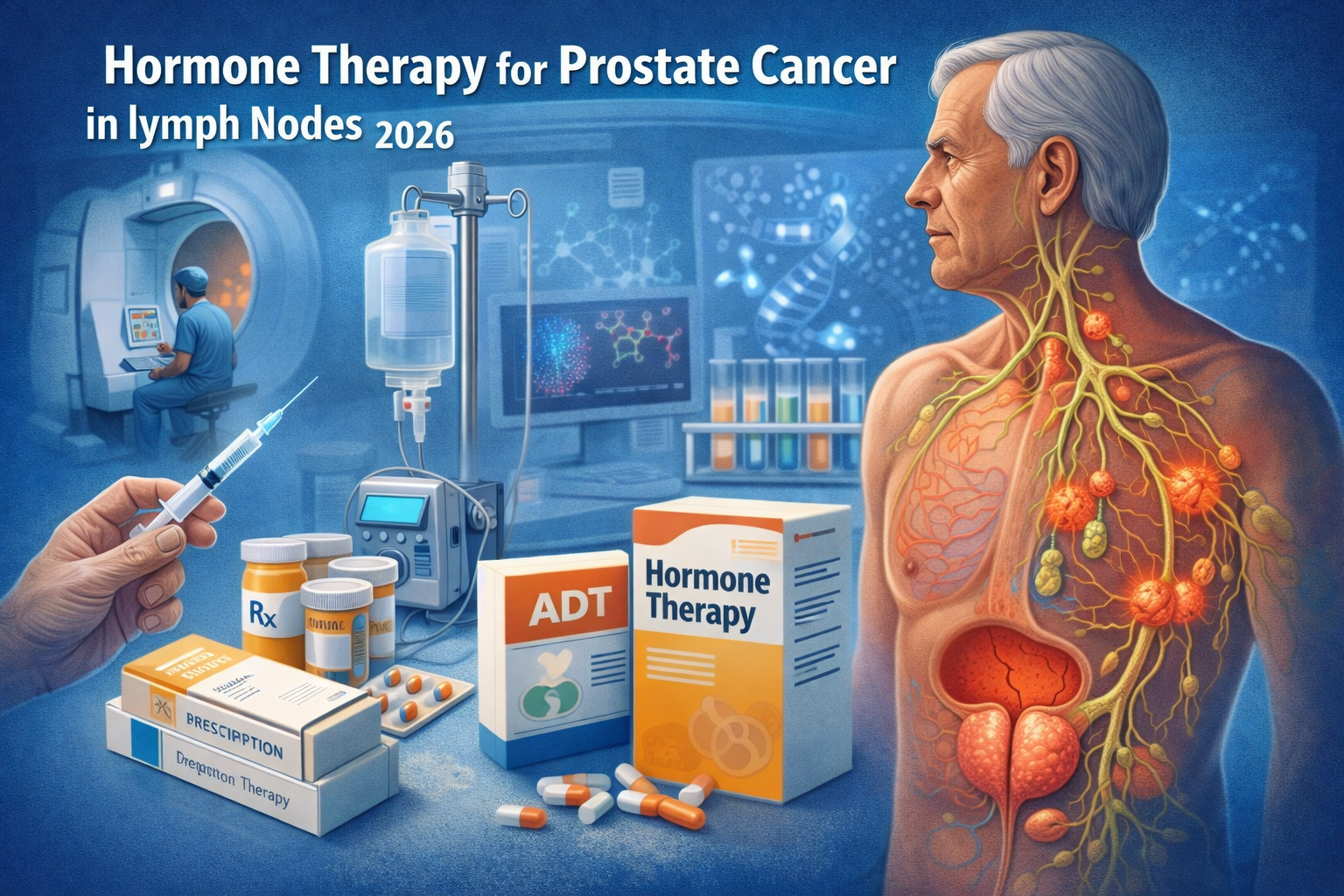
Current Hormone Therapy Protocols (2024)
NCCN 2024 recommends ADT + docetaxel (6 cycles) for mHSPC with high-volume disease (CHAARTED criteria: 4 bone mets or visceral), improving OS by 17 months (HR 0.61). This approach targets metastatic prostate cancer with lymphatic involvement or beyond. Patients with N1 or M1a disease benefit from intensified hormone therapy.
For nodal metastasis in lymph nodes, protocols balance efficacy and side effects. Androgen deprivation therapy (ADT) forms the backbone, using LHRH agonists like leuprolide or GnRH antagonists like degarelix. Combination strategies enhance outcomes in hormone-sensitive prostate cancer (HSPC).
The STAMPEDE trial showed ADT + abiraterone improves 3-year survival from 42% to 58% in advanced cases. This supports adding androgen receptor pathway inhibitors (ARPIs) for better progression-free survival (PFS). Experts recommend tailoring based on PSMA PET scan results and PSA levels.
Key protocols for N1/M1a disease include options like ADT monotherapy, ADT plus ARPI, or ADT with chemotherapy. Multidisciplinary care involving urologists and oncologists guides patient selection. Monitoring for side effects like hot flashes and fatigue remains essential.
| Protocol | Description | Dosing | Indications |
|---|---|---|---|
| ADT Monotherapy | Leuprolide for chemical castration and testosterone suppression | 22.5mg every 3 months | N1/M1a HSPC, low-volume disease |
| ADT + ARPI | Apalutamide with ADT for dual hormone blockade | 240mg daily | N1/M1a with high-risk features |
| ADT + Docetaxel | Combination chemohormonal therapy for rapid control | 75mg/m every 3 weeks x6 cycles | High-volume N1/M1a or visceral involvement |
ADT Monotherapy Details
ADT monotherapy suits patients with regional lymph nodes (N1) and minimal symptoms. Leuprolide injections suppress testosterone to castrate levels within weeks. This avoids tumor flare common with initial LHRH agonist use.
Practical monitoring involves quarterly PSA checks and digital rectal exams. Side effects like erectile dysfunction and muscle loss require lifestyle adjustments. Intermittent ADT may improve quality of life for some.
ADT + ARPI Combinations
Adding apalutamide to ADT targets the androgen receptor directly in nodal metastasis. Daily oral dosing fits into routines for M1a disease. This next-generation approach delays progression to CRPC.
Patient selection considers comorbidities and cardiovascular risk. Regular bone scans track bone metastasis risk. Experts favor this for oligometastatic disease detected by PSMA PET.
ADT + Docetaxel for High-Risk Cases
For high-volume lymphatic involvement, docetaxel with ADT offers upfront intensification. Six cycles pair with continuous ADT for OS gains. This suits younger patients tolerating chemotherapy.
Manage neutropenia and fatigue through supportive care. Multidisciplinary teams coordinate with radiation for pelvic lymph nodes. Long-term follow-up assesses for castration-resistant prostate cancer transition.
Emerging Therapies Anticipated for 2026
Phase III trials like PSMAfore and MAGNITUDE project 2026 approval of darolutamide plus ADT for non-metastatic castration-resistant prostate cancer, extending metastasis-free survival versus placebo in patients with nodal metastasis.
Pipeline previews highlight AR N-degraders using PROTAC technology in clinical trials, targeting androgen receptor degradation for hormone resistance in lymph node involvement. These agents aim to overcome CRPC progression after standard ADT.
PSMA-targeted therapy with Lu-177-PSMA, building on VISION trial results, shows promise for metastatic prostate cancer with lymphatic spread. ASCO 2024 abstracts discuss ongoing expansions for earlier nodal disease.
PARP inhibitors combined with enzalutamide enter phase III trials, offering biomarker-driven therapy options for patients with HRR mutations and regional lymph nodes. Talazoparib plus enzalutamide regimens target DNA repair in advanced settings, per recent ASCO insights.
Next-Generation AR Inhibitors
Darolutamide (Nubeqa(r)), a next-generation hormonal agent, shows rPFS benefit in the ARASENS trial for metastatic HSPC, with lower blood-brain barrier penetration reducing seizures compared to enzalutamide in cases of pelvic lymph nodes.
These next-generation AR inhibitors improve hormone blockade for nodal metastasis. Darolutamide uses a 600mg BID dose, often titrated from 300mg to minimize fatigue in ADT combinations.
| Drug | Dose/Schedule | Key Side Effects | Drug Interactions |
|---|---|---|---|
| Abiraterone (abiraterone acetate) (CYP17i) | 1000mg QD + prednisone 5mg BID | Hypertension, hypokalemia | Strong CYP3A4 inhibitors |
| Enzalutamide | 160mg QD | Fatigue (common), seizures | CYP2C8 substrates |
| Apalutamide | 240mg QD | Rash, falls | CYP2C8, CYP3A4 |
| Darolutamide | 600mg BID | Best CNS safety | P-gp, BCRP substrates |
Patient selection favors darolutamide for those at seizure risk or with brain metastasis concerns. Monitor PSA levels (prostate-specific antigen) closely during titration to assess response in lymphatic involvement.
Combination ADT Regimens
PEACE-1 trial establishes combined androgen blockade (CAB) with ADT plus docetaxel plus abiraterone as a standard for metastatic hormone-sensitive prostate cancer, enhancing overall survival in high-volume regional lymph nodes.
Regimens progress from doublet therapy (continuous ADT + androgen receptor inhibitors (ARI) like enzalutamide) to advanced combinations for N1 disease.
- Doublet: luteinizing hormone-releasing hormone (LHRH agonists) such as leuprolide with darolutamide for initial androgen blockade.
- Triplet: ADT + docetaxel + ARPI; ARASENS shows darolutamide adds OS benefit, with neutropenia managed via G-CSF support.
- Quartet: Add radiotherapy per STAMPEDE arm H for low-volume metastatic cases with pelvic involvement.
Sequencing starts ADT for castrate levels, adds docetaxel cycles, then ARPI. Multidisciplinary care addresses fatigue and neutropenia through dose adjustments and comorbidity management.
Patient Selection and Risk Stratification
AR-V7 splice variant detection via liquid biopsy predicts poor enzalutamide response in prostate cancer with lymph node involvement. This biomarker helps stratify non-metastatic castration resistance prostate cancer (nmCRPC) patients for taxane preference over AR inhibitors. Clinicians use it to tailor hormone therapy and avoid ineffective treatments.
Risk calculators like the MSKCC nomogram integrate Gleason score, PSA levels, and number of metastatic sites to estimate 5-year overall survival. For patients with nodal metastasis, this tool guides decisions on androgen deprivation therapy (ADT) intensity. It supports precision in selecting combination therapy with docetaxel for high-risk cases.
| Variable | Input Range | Impact on 5-yr OS Prediction |
|---|---|---|
| Gleason score | 6-10 | Higher scores lower predicted OS |
| PSA levels (ng/mL) | 0-100+ | Elevated PSA reduces survival estimate |
| Number of sites (lymph node biopsy, sentinel lymph node) | 1-10+ | More sites, especially lymph nodes, worsen prognosis |
Biomarkers such as AR-V7 positivity, high ctDNA burden, and PI3K/PTEN loss identify patients likely to progress on standard ADT. In metastatic prostate cancer with lymphatic involvement, these guide shifts to next-generation agents like abiraterone acetate or enzalutamide. Experts recommend genomic profiling for biomarker-driven therapy per NCCN guidelines.
For elderly patients, use the CGA with ADL score; scores below 4 suggest ADT monotherapy to minimize adverse effects. This approach balances hormone blockade efficacy with comorbidity management in geriatric oncology. Multidisciplinary care involving urologists and oncologists refines patient selection.
Treatment Administration and Dosing
Leuprolide depot 45mg IM q6mo achieves castrate levels in 98% by day 29 (TAP-25 study), preferred for N1 disease requiring long-term ADT. This dosing schedule suits patients with lymph node involvement in prostate cancer, offering sustained testosterone suppression. Providers select it for convenience in HSPC.
Common LHRH agonists (GnRH agonists) include leuprolide at 7.5mg q1mo, 22.5mg q3mo, or 45mg q6mo, alongside goserelin at 3.6mg or 10.8mg SC q1/3mo, triptorelin, and histrelin. For GnRH antagonists (LHRH antagonists), degarelix starts with a 240mg loading dose followed by 80mg q1mo, or relugolix. These options support androgen deprivation therapy (ADT) in nodal metastasis cases.
| Medication | Dosing | Administration |
|---|---|---|
| Leuprolide | 7.5mg q1mo, 22.5mg q3mo, 45mg q6mo | IM injection |
| Goserelin | 3.6mg q1mo, 10.8mg q3mo | SC implant |
| Degarelix | 240mg load + 80mg q1mo | SC injection |
Surgical bilateral orchiectomy provides permanent chemical castration for under $500 as an outpatient procedure. It fits patients needing lifelong hormone blockade without injections, especially in advanced cases with regional lymph nodes. Recovery focuses on managing side effects like hot flashes and sexual dysfunction.
LHRH Agonists vs Antagonists
HERO trial: degarelix superior CV safety (8.9% MACE vs 14.0% leuprolide at 12mo), immediate castrate levels without flare (PSA rise <10% day 3). This makes GnRH antagonists ideal for prostate cancer with lymph nodes at high cardiovascular risk. Patients with nodal metastasis benefit from rapid PSA levels drop.
| Aspect | LHRH Agonists | GnRH Antagonists |
|---|---|---|
| Tumor flare risk | Present (13% risk) | No flare |
| Cost | Cheaper (~$150/mo) | Higher (~$450/mo) |
| Side effects | Lower injection reactions | 40% injection site reactions |
LHRH agonists like leuprolide or goserelin risk initial tumor flare, prompting anti-androgen cover (bicalutamide, flutamide, nilutamide, cyproterone acetate) in metastatic prostate cancer. Antagonists like degarelix avoid this, suiting M1a disease with lymphatic spread. Experts recommend antagonists for urgent testosterone suppression.
Switch protocol uses a 4-week degarelix bridge to leuprolide for smooth transition in long-term ADT. This approach minimizes flare during combination therapy with radiotherapy or docetaxel. Multidisciplinary teams tailor choices based on comorbidities and quality of life concerns like erectile dysfunction.
Monitoring and Side Effect Management
Monthly PSA levels are checked for the first three months of hormone therapy for prostate cancer in lymph nodes, then every three to six months thereafter. Castration resistance is defined as PSA greater than 2 ng/mL with a 25% rise over nadir per PCWG3 criteria. This schedule helps detect biochemical recurrence early in cases of nodal metastasis.
Regular monitoring includes testosterone levels to confirm castrate levels from ADT like LHRH agonists or GnRH antagonists. Imaging such as PSMA PET (PET-CT scan) tracks progression in regional lymph nodes or distant sites. Experts recommend multidisciplinary care with urologists and oncologists to adjust therapy.
FRAX score integration guides bone density assessment alongside DEXA scans for osteoporosis. Cardiovascular checks focus on blood pressure and lipids for patients on long-term hormone blockade. Patient education on symptoms improves quality of life during treatment.
Side effects demand proactive management to sustain progression-free survival. Common issues like hot flashes and osteoporosis require tailored interventions. This approach aligns with future directions 2026 guidelines from NCCN and EAU guidelines for advanced prostate cancer.
Common Side Effects and Management Strategies
| Side Effect | Frequency and Impact | Management Options |
|---|---|---|
| Hot flashes | Common with ADT, disrupts sleep and daily life | Venlafaxine 37.5 mg daily; lifestyle changes like cooling techniques |
| Osteoporosis | Bone density loss from testosterone suppression | DEXA scan every 2 years; denosumab 60 mg every 6 months |
| Cardiovascular disease (CVD) | Increased risk with hormone therapy | Statin therapy; maintain BP below 130/80 mmHg |
| Fatigue and muscle loss | Affects mobility and strength | Exercise programs; nutritional support |
| Erectile dysfunction | Impacts intimacy | PDE5 inhibitors; counseling |
This table outlines key side effects of hormone therapy in metastatic prostate cancer with lymphatic involvement. Management starts with baseline assessments including PSA levels before ADT initiation, often using LHRH agonists or LHRH antagonists. Regular follow-up ensures timely adjustments.
For hot flashes, patients report relief from low-dose venlafaxine alongside deep breathing exercises. Osteoporosis prevention uses FRAX score to identify high-risk cases for denosumab, especially in HSPC transitioning to CRPC. CVD strategies include smoking cessation and diet modifications.
Expected Outcomes and Survival Data
The LATITUDE trial showed that ADT plus abiraterone in high-risk hormone-sensitive prostate cancer with nodal metastasis improves median overall survival from 53 to 58 months, with a hazard ratio of 0.66. This sets a new benchmark for N1 disease and M1a disease or M1a metastasis. Patients with lymphatic involvement benefit from this combination therapy or CAB.
Landmark phase III trials like CHAARTED demonstrate gains with androgen deprivation therapy plus docetaxel, following NCCN guidelines, EAU guidelines, and AUA guidelines. In high-volume metastatic prostate cancer, adding docetaxel to ADT extended median OS from 32 to 51 months. Subset analyses highlight benefits for those with regional lymph nodes affected.
STAMPEDE trial data supports continuous ADT or intermittent ADT combined with abiraterone, improving 3-year OS from 42% to 58% in similar groups with bone metastases or visceral metastases. ARASENS trial with triplet therapy added 14 months to median metastasis-free survival. These results guide 2026 guidelines for advanced cases with lymph node involvement.
| Trial | Regimen | Key Outcome | Population |
|---|---|---|---|
| LATITUDE | ADT + Abiraterone (ARI) | Median OS 5358 mo (HR 0.66) | High-risk mHSPC, N1/M1a |
| CHAARTED | ADT + Docetaxel | High vol OS 3251 mo | Metastatic HSPC |
| STAMPEDE | ADT + Abiraterone | 3-yr OS 4258% | High-risk or metastatic |
| ARASENS | Triplet (ADT + Doc + Darolutamide) | +14 mo MFS | Metastatic HSPC |
Kaplan-Meier curves from these trials show steeper separation in curves for nodal metastasis subsets. N1-specific analyses confirm prolonged progression-free survival with next-generation hormonal agents and novel hormonal therapy. Experts recommend these for patient discussions on prognosis.
Frequently Asked Questions
What is hormone therapy for prostate cancer in lymph nodes in 2026?
Hormone Therapy for Prostate Cancer in lymph nodes 2026 refers to advanced androgen deprivation therapies (GnRH agonists, GnRH antagonists) that block testosterone production or action, targeting cancer cells that have spread to lymph nodes. By 2026, it includes next-generation drugs like darolutamide and relugolix, combined with PSMA PET and PET-CT scan imaging-guided precision medicine to shrink tumors and delay progression.
How effective is hormone therapy for prostate cancer in lymph nodes in 2026?
In 2026, Hormone Therapy for Prostate Cancer in lymph nodes shows high efficacy, with real-world evidence and studies reporting up to 80-90% response rates in node-positive cases. Newer agents reduce PSA levels by over 95% in many patients, extending metastasis-free survival by 2-3 years compared to earlier treatments, per updated clinical trials.
What are the common side effects of hormone therapy for prostate cancer in lymph nodes in 2026?
Side effects of Hormone Therapy for Prostate Cancer in lymph nodes 2026 include hot flashes, fatigue, bone density loss, and cardiovascular risks. However, 2026 advancements like AI in oncology-monitored supplements and selective androgen receptor modulators (SARMs) minimize these, with only 20-30% of patients experiencing severe symptoms.
Who is a candidate for hormone therapy for prostate cancer in lymph nodes in 2026?
Candidates for Hormone Therapy for Prostate Cancer in lymph nodes 2026 are men with hormone-sensitive metastatic disease confirmed via PSMA-targeted therapy and PSMA-PET scans showing nodal involvement, unfit for salvage lymph node dissection, pelvic lymphadenectomy, radiation therapy, or surgery, following 2026 NCCN guidelines.
How long does hormone therapy for prostate cancer in lymph nodes last in 2026?
Hormone Therapy for Prostate Cancer in lymph nodes 2026 is often intermittent ADT or continuous ADT, lasting 18-36 months initially, based on PSA nadir and imaging. Personalized protocols using genomic profiling in 2026 allow treatment holidays, improving quality of life while maintaining control over nodal metastases.
What are the latest advancements in hormone therapy for prostate cancer in lymph nodes in 2026?
By 2026, Hormone Therapy for Prostate Cancer in lymph nodes features triplet therapies (ADT plus novel anti-androgens and PARP inhibitors), immunotherapy combos including cabazitaxel, and nanoparticle delivery for targeted nodal treatment using radiomics and monitoring for AR-V7 splice variant or circulating tumor cells. Phase III trials report doubled progression-free survival, revolutionizing management of lymph node-positive prostate cancer.